Niles Adobe – Murrieta’s Bones

La Vereda del Monte

On a well-trod path at the end of the Old County Road, I pass a few youngsters returning from a jaunt. As I walk by, I ask if they had been out to the sidewalk. They just stared, a little hesitant with my shoulder harness, camera bags, and boots, then finally one of them said, “Yeah”.
“Not so secret,” I said. I could hear a few chuckles fade away behind me. The “Secret Sidewalk” and the old aqueduct, the sole water source to much of the Bay Area until Hetch Hetchy, is a fascinating narrative, but there are other secrets out here, concealed in the narrow mouth of this canyon that are of interest to me. I look across the vale and note how steep the incline is on both sides, and how secluded it was, hemmed in by a landscape that vaults to the top of Sunol Ridge, the same today as it was when it was the stomping grounds of Joaquin Murrieta.
Comparing the horizon in the photographs, with some confidence I can say I’m within a hundred yards. I need to get down onto the highway to get the exact height and axis, but for now I am going to assume I’m on point.
From what I’m onto in this photo, the location of Murrieta’s adobe is just to the left and up the canyon. There’s a copse of oak and sycamore that I’m looking for, and from what I’ve been told I’m so close that If I were tending to chores, on this very spot a hundred and seventy-five years ago, and my name was Jesus Feliz, I could hear my sister Rosa shaking out the rugs on the front porch.

Rankin Adobe circa 1897

Known as the Rankin Adobe, referenced by Latta and believed to be the resting place of Murrieta’s bones, the jury is still out on any authenticity. Rumor has it that the Discovery Chanel has a show that’s dropping featuring a recent excavation. The excavation in 1986, at the California Nursery Historical Park – Vallejo’s property, where he housed his Vaquero’s in Murrieta’s time – proved to be a dead end. One thing is certain, many have been on this trail before me, archaeologists, folklorists, treasure hunters, and another, for me, it isn’t his bones I’m after, but looking for them. My treasure is in the hunt.
The image above was taken around 1897, before the California Pressed Brick factory was founded. Just to the left of this image would be the outcrop where the water tower still sits. To the right is a picket fence, which marks the road – Old County Road?

Nov 3, 22 – Savage

Uncategorized

This guy came in on the same wagon train as the Donner Party, splitting off the month before they made their fatal decision to turn back. He worked at Sutter’s Fort for a time, just prior to the discovery of gold there. He spoke all five dialects of the native tribes of the Tularenos, fluently, No other white man has ever been integrated into Native American Culture to that extent, Jack Crabb – Little Big Man – was a fictitious character. He used racist tactics, well known by then, from Cortez onward – to subdue the natives, use shock and awe. In Savage’s case, he pulled no punches. His first was to ignite a barrel of gunpowder and time it with some voodoo, so that he appeared from a flash of blinding light and gave him his name – The Blonde King. He then procured a galvanic battery from San Francisco, capable of administering a jolt, and concealed it in the skin of a Grizzly bear. The Grizzly was revered by all native people, for good reason, and Savage exploited this reverence unashamedly, by wearing the skin and reaching his hand out to the guests he invited into his wigwam.

October 26, 23 – Marsh

La Vereda del Monte

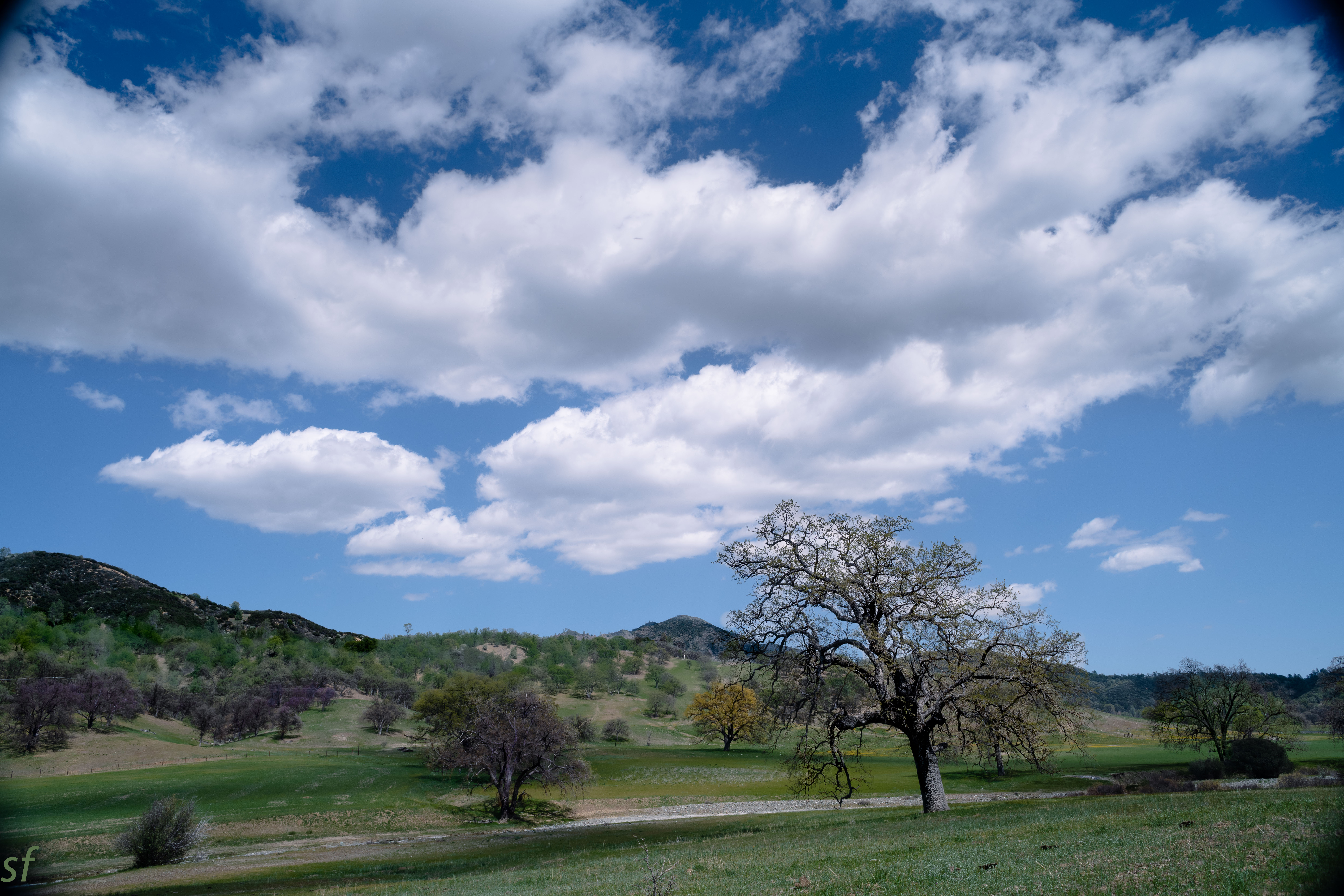
John Marsh territory, the north eastern edge of the Rancho Los Meganos land grant. In the 1830’s Don Juan Marsh appropriated it for $500, after becoming a Mexican Citizen, the good doctor was baptized Catholic, and then made a fortune. He was one of the wealthiest ranch owners in the state, herding several thousand head each year to the butcher in San Francisco. Murrieta’s gang of vaqueros knew this land as if they were born there, the grassy knolls were the perfect pasture, and the oak trees the perfect place for a siesta.

Oct 17, 22 – picking up the trail

La Vereda del Monte

On the morning of the Cantua massacre, two of Murrieta’s men, Ochovo and Lopez were on lookout when Capt Harry Love and his Rangers overtook them on a bluff above the creek. The rest of Joaquin’s vaqueros were just making sunrise, rolling out of their blankets, taking a broad yawn and letting off a good fart. Coming in from the rising sun – a part of tale that sounds romantic enough, but as with much of the Murrieta mythology, is dispelled by Latta, pointing out the geographical unlikelihood. It is more probable that they were dozing on watch and Love and company got the drop and woke them with the barrel end of their Colt six shooters. By accounts, they were then tied to a tree, where, if they didn’t see, they certainly heard the gun battle below. Approaching the campfire, Lieutenant Connor notes in his report, that Tres Dedos is seen putting something in the coffee grinds, presumably a bag of gold, is gunned down with seven balls, and the rest of the shooting begins. This has always been a point of interest to me, coming from accounts later scribed in reports (both Love’s and Connor’s) – for Murrieta’s trove, one that every one of the Rangers were aware of, and no doubt had designs upon, was a half a ton in nuggets, and the dust recovered in the bottom of the overturned coffee pot was worth less than the price of one California Mustang. And yet, it is turned in, as perhaps some justification for the brutality of the raid. This should not come as a surprise, for if one was after a pile of already stolen loot, you are not going to admit to knowing of its existence, let alone, report the find, however, to bring the attention to the concealing of gold, is curious, and throws the whole issue up to speculation, as if to say: ‘we could have easily kept this a secret and kept the gold, but we didn’t’ – as a way of defending their integrity against the accusation, or suspicion of impropriety – I will take up the fate of Joaquin’s treasure, as it is of central importance to the story, in another post.

May 30, 21 – Alcalde Hills

La Vereda del Monte

Joaquin Ridge – Looking out across the valley. I’m through the gate and following Clear Creek. This is BLM land. Old mining country. Serpentine wilderness. Up the road leads to the trail once traveled by Murrieta and his gang of horse thieves. Below, just beyond the Alcalde Hills, is Cantua Creek, where he was killed in a gun battle with Captain Harry Love of California Rangers. It’s a steady incline, 30 miles from nowhere, with no GPS and no cell service, but the road is good, my spirit is up, and my will is strong. I’m getting close – La Vereda del Monte

Marsh Creek

La Vereda del Monte

The adventure was enlightening, but like Pedro Fages, the Spaniard who sought a route north of San Francisco, only to be deterred by a river, I did not find what I was looking for. In my case it was a creek. Marsh Creek. And Im headed for the intersection of Coyote and Mollok trails in the Morgan Territory region. I may not have found it, but what I did find was provocative enough, as much in the way it came about, as for what I discovered. After my morning ritual, which consisted of staring at my naval, coffee, and more staring at my coffee, I opened an email, clicked a link and am listening to Michael Meade talk about Carl Jung and dreams, and I note that it has been ages since I studied my dreams, and almost at the same time I have an inclination which is as close to an inspiration as anything yet, today, and I pull out a map, and here I go. After packing my gear and some food I note that the day is passing but if my calculations are correct, I have time. But what I don’t anticipate is the work on Morgan Territory and the half hour wait, watching a rooster walk across the road and waiting for the signalman to flop his sign from stop to slow. I also don’t anticipate the decent on the trail, and although the landscape, covered in oaks, is as mystical as any of my travels out here, I am determined to stay on it until I come to my destination. The decline, I mull over, means an accent later in the day, and this obvious point is followed by another – if I am to proceed, I have no choice – when I am interrupted, by the sound of falling water. I can see a cairn of hard rock granite in the creek bed through a field of poison oak, and if I were a Volvon, I would consider this as a primo grinding spot. Remember, I am looking for artifacts, cupules, where they beat the acorn into a paste to make their bread, and I am standing here wondering how many acorns they have ground, every day, for as long as they were eating mush in the morning, which is as long as the culture survived, and suddenly the fruit of the oak are plentiful as there are stars in the sky, and this is astonishing, and impels me.

Now I have never willingly walked into a copse of poison oak – Needless to say it’s a slow go, stepping over vines with dingle berries just above my head and Im thinking, ‘I shouldn’t have left my machete in the car,’ but the water rushing below gets louder, and now the boulders tower over me, and I know that I am close. Marsh Creek is flowing swift and gathering into pools one below the other, large enough to bath in, and I take off my hat and dunk my head and use the silt to wash the underside of my arm, where I know I have rubbed against it. It’s cool and invigorating and I offer my thanks and look at the rocks above me scouring the surface for indentations, circles of black in the moss, much like gopher holes on a hillside, but not one do I see. I climb a few faces more, then I see a rock, slightly higher than the rest, a sort of pinnacle, and I decide to climb it – its only fifteen feet or so – and I say to myself, ‘if I don’t find any, I turn back,’ which means back up the hill to the trail through the poison oak. There are no cupules, not one. But there is something else. On top of where I’m standing, impossible to see from any position below, is this image, glazed onto the surface. It’s some type of mortar, perhaps lime – no moss has grown, a circle and the glyph of a cross? Does this refer to the Spaniards, or is it some more ancient meaning? I rub my hand over it, then pour a little water on it. It’s oddly ‘indelible’ and not likely to have been put there by anyone other than a Volvon, Over the last century, as many are aware, cement has been made on the slopes of Diablo, the mountain they call Tushtak, which means ‘the coming of the day’. When I walk back down the pools, I dunk my head again, and even though I did not find what I was looking for, I entered a dream.

Fages

La Vereda del Monte

In 1772 Pedro Fages, the first governor at the presidio in Monterey, and Fr Crespi, a ranking clergy under Fr Serra, mounted an expedition to explore the land east of San Francisco. Following the San Pablo Bay along the strait to Martinez, then topping the western spur of Mt Diablo they became the first Europeans to see the San Joaquin Plain and the course of rivers that extended beyond, to the foothills of the Sierras. Crespi recognized the view as a vast and endless paradise, but it was not the route north that they were seeking. They then turned south, passed through Danville, then to Livermore, then west, back to the coast, over what is now Sunol. On their way they passed within a league of the Volvon, the stone grinders, caretakers of the mountain. One of the comments that Crespi makes is reference to the oaks, exceeding anything he had witnessed in all of his travels. I stood at stared at this one for some time; the oak has a resonance which cannot be described, even tho’ us poets try, not a sentence, not a word, just my open jaw and the eyes of wonder and I am reminded of something that has always been.

April 17th – La Vereda del Monte – San Benito wilderness.

La Vereda del Monte

Sonora, Mexico, where Murrieta was born, was initially under the oversight of the Jesuits, who, in their mission ethos, integrated the native peoples rather than dominated them. One of the practices was to use the vaquero, indigenous cowboys, who had, by the time of Murrieta’s day, learned to work the Spanish horse over generations. The mission culture and the church would have shaped his character at a young age, both as a horseman and in his education. This introduces the theme of racism from an angle that is nuanced, but significant. Racism is said to play a large role in understanding Murrieta’s actions as a thief and killer; it is a major aspect of the ‘gold bug’ culture, the Vigilance actions, and the lynchings of Californios, are examples, the slaughter of the grizzly, might be another – and he would not have seen himself as openly defying the church – or at least been able to make some justification for his murderous spree. Junipero Serra was a Franciscian; a fervent missionary who ‘relished physical suffering and self mortification’, and not the liberal ideals of the Jesuits. The church may have had little or no influence on Murrieta, but he may have been able to maintain at least some identity with the Catholic Church through the Jesuits, And even – and this is pure speculation – add this to his other well known indictments of racism. A further complexity lies in his ethnic identity, Murrieta would have seen himself as white, but also native to Mexico, able to trace his roots through Spanish blood, and also connected to the earth, as only an indigenous people can be. It is this lineage, the lineage of the Spanish vaquero, that would have given him a right of passage in California; a rite that would have led him to the Panoche Pass through the San Benito Mountains and along a road very near to the one I’m on now. We’re above the turn off to Clear Creek, and I have passed by, stopped, inspected, or scaled almost every gate that looks like it goes anywhere. All are locked, none have signs except: No Trespassing – no trail head, no opportunity no way, and it seems my quest to reach the ridge has been thwarted – but only for a time. I’m done for the day, I have to teach a zoom class tomorrow, and there is no wi fi out here, so it’s back to LA. I will reconnoiter and return as soon as I can, for another day – La Vereda del Monte.

May 23

I’ve jumped the fence and I’m standing in the middle of this field having a moment. It feels like I’ve been here before, maybe I was a seed on the ground, or maybe a tree, a long time ago, and now I’m in someone’s pasture looking for the mountain path of Joaquin…

I’m on Los Gatos Road, following the creek, headed east. The mountain is virulent and the earth is silt from the river washed down from the highlands where Murrieta’s trail follows the ridge above, and I’m looking for a way in. I stop and get out of the car and sit in a field and can feel the earth give way perfectly to the contours of my body and when I stand I see my impression as I walk away with the sand in the top of my socks sifting down into my shoes and two or three decent images in my camera.

May 22, 23 – Brushy Peak

La Vereda del Monte

Geo Survey marker, one of the highest peaks south of Diablo. There are no charred stones but this is likely the spot where Murrieta lit his signal fires to el Mocho up the grade. And here, he most certainly hosted a guest or two, his crew would be in a celebrity mood, with a big job accomplished, getting the drove off, and a long trek ahead, they’d pass the night in a song. Just after rounding a hundred head, branding them at Point of Timber – the old rodeo grounds, for Marsh and every other rancher in the horse trade. where they would round wild Mustangs from the thick Tule grass along the San Joaquin River. herd them, brand them and sometimes break them on the grounds, most ending up on ranches from Stockton to San Jose. Musteneros. mustang runners, they were called, with a tilde. Murrieta’s crew were skilled, organized, hard riders, who knew the land, and knew what it took to make money – 300 horses, every month, from Brentwood to Sonora, Mexico. Just below this peak, they would corral the herd, hobbling those that were difficult, and prepare for the long path south along La Vereda del Monte. Brushy Peak was the second station along this corridor. The herds would be fattened to 300 by the time they hit Cantua Creek, 200 miles south, along the Diablo Range.

May 19, 21 – Condon Peak

La Vereda del Monte

White Oaks at the trail head to Condon Peak, I’m going to walk it for an hour or so, see where it goes, but I have no intention of climbing Condon Peak. I need to find a way into the back country and get up on the ridge, and this isn’t it, I know that. If the gate is locked at Clear Creek, and I cant get a cell phone signal to call the BLM field office in Marina to get the combination, I have to find another way – Joaquin Rocks Lookout Trail, – see below for map – I drove up and down Los Gatos Creek, looking, half the day yesterday, and its not where it’s supposed to be, and all I can say is I have no idea where the blazes I am, but who cares? The morning is invigorating, a modest incline ahead., I got a mojo on from that espresso, so I think I’ll power it on up. And a thought crosses my mind and I’m wondering: Do you think Joaquin had coffee in the morning when he woke up? flat on his back, his hat over his eyes, leaning his head against the saddle and giving a big ole yawn. I’ll bet the fire was already up and the water on the boil, his cohort in crime, Manuel Garcia, alias Three Fingered Jack, never slept. Ever since his infamous accident when he got his fingers stuck on the horn of a saddle in between the rope and a steer and he sat there and watched as it broke his two best fingers clean off his hand. He didn’t sleep much after that. It had nothing to do with his conscience, he’never so much a twitched in his sleep over the dozens of men he brutally murdered, so far as he was concerned they deserved it, every bit, revenge, pure and simple, for every one of the peoples he knew, some of them were good friends, their lives ripped apart by the Yankee Rascistas, ‘the stupid ones’, he would kill every last one in their sleep, That’s what kept him up, he was running out of time, he could never kill every last one, not even close, and he knew it. So when Joaquin sat up and started shaking out his boot just in case a scorpion was sleeping in one, and squinting over toward the fire, the coffee was already on the boil. – La Vereda del Monte